MarTech (or Marketing Technology, the use of software, tools, and digital technologies to execute, manage, and analyze marketing strategies and campaigns effectively) has penetrated every sales and marketing department for almost two decades now, but the advent of generative AI is taking this enabling platform to a whole new level. AI-powered MarTech can, for instance, craft custom messages that resonate with individual consumer behaviours, interests, and preferences, while also aiding in creating preliminary drafts for brand advertisements, slogans, product summaries, and social media content.
It’s not all easy though, as the integration of generative AI into marketing processes demands a strategic and thoughtful approach. Without adequate protections against issues like copyright infringements, plagiarism, and branding recognition, models trained on publicly accessible data can potentially violate intellectual property rights. Applications such as virtual try-ons might portray certain demographics unfairly due to flawed or restricted training data. Let’s delve into what is already possible today.
Featured Insight: Operational benefits of an AI-powered MarTech stack
The most immediate and readily available AI-powered MarTech capabilities focus on realising operational benefits such as:
Streamlined and superior content creation. Generative AI can drastically shrink the time spent on ideation and content formulation, hence conserving precious resources. It enables the creation of a unified brand voice, writing style, and format across diverse content pieces and across different content-producing groups (think both in-house copywriters as well as your network of freelancers and social media managers). Teams can collectively brainstorm with generative AI to form a cohesive narrative, which can lead to refined personalization of marketing messages targeted at varying demographics, geographies, and customer segments. The technology’s ability to produce tailored content will amplify customer attraction, conversion, and retention at an unprecedented scale because it will make each interaction unique and personal.
Optimized utilization of data. Generative AI can assist marketing teams to navigate through unstructured, inconsistent, and disconnected data by interpreting abstract sources like text, images, and varied structures. Such tools can identify and integrate trends, key drivers, market, and product opportunities from unstructured data sources. We used to leverage this already for sentiment analysis (monitoring forums, review sites, etc.) but now we can reach a new level of granularity and extract more value even from underutilized first-party data.
SEO enhancement. Generative AI can improve conversion rates while decreasing costs via SEO for marketing and sales tech components such as page titles, image tags, and URLs. Not only the technical aspect of SEO can be managed with a “fire and forget” approach, but today anyone uploading content on a branded property can do so with all the right SEO principles incorporated in their copy.
Personalized product discovery and search. Generative AI can utilize multimodal inputs to generate a deep understanding of customer profiles, which can help customers discover the most relevant products and generate personalized product descriptions. As per my first point, the main advantage of AI-powered MarTech is to unlock individual experiences, which previously was only possible for high-touch/high-value customers, to the whole prospect and client population.
McKinsey estimates that generative AI could potentially enhance the productivity of the marketing function by 5-15% of total marketing spend. However, these calculations do not consider the indirect impacts on productivity, which could include higher-quality data insights, better-targeted customer segments, and potential savings on external channels and agencies due to improved content for owned channels.
Moving down the funnel: the SalesTech opportunity
As we move down the funnel and look at sales, we find a few more benefits:
Higher likelihood of sales. Generative AI can prioritize sales leads by creating comprehensive consumer profiles and suggesting action points to improve client engagement at every stage of interaction. Salesforce Einstein, for instance, is just one of many technologies bringing to life this opportunity.
Effective lead development. Generative AI can support sales representatives by generating relevant product sales information, customer profiles, and conversation scripts to facilitate customer dialogue. This is particularly helpful in B2B environments, where the sales enablement team produces bespoke pitch support material only for top opportunities. Here again, an AI-powered SalesTech platform can produce high-quality pitch materials for virtually every pitch.
Moreover, generative AI can play the role of a virtual collaborator, boosting the productivity of employees by complementing their work in ways that streamline their tasks. Its capacity to quickly assimilate a vast amount of data and draw insights from it allows the technology to provide options that can significantly enhance knowledge work. This can expedite the process of product development and enable employees to focus more on high-impact tasks. Many use tools such as OpenAI’s ChatGPT or Anthropic’s Claude on a daily basis, although only once similar capabilities will be legitimised by the company, hosted on a secure private cloud environment with access to first-party data, their impact will really be perceived by every user.
Judging by the below data, in the next few months we will witness a radical transformation of the MarTech stack:
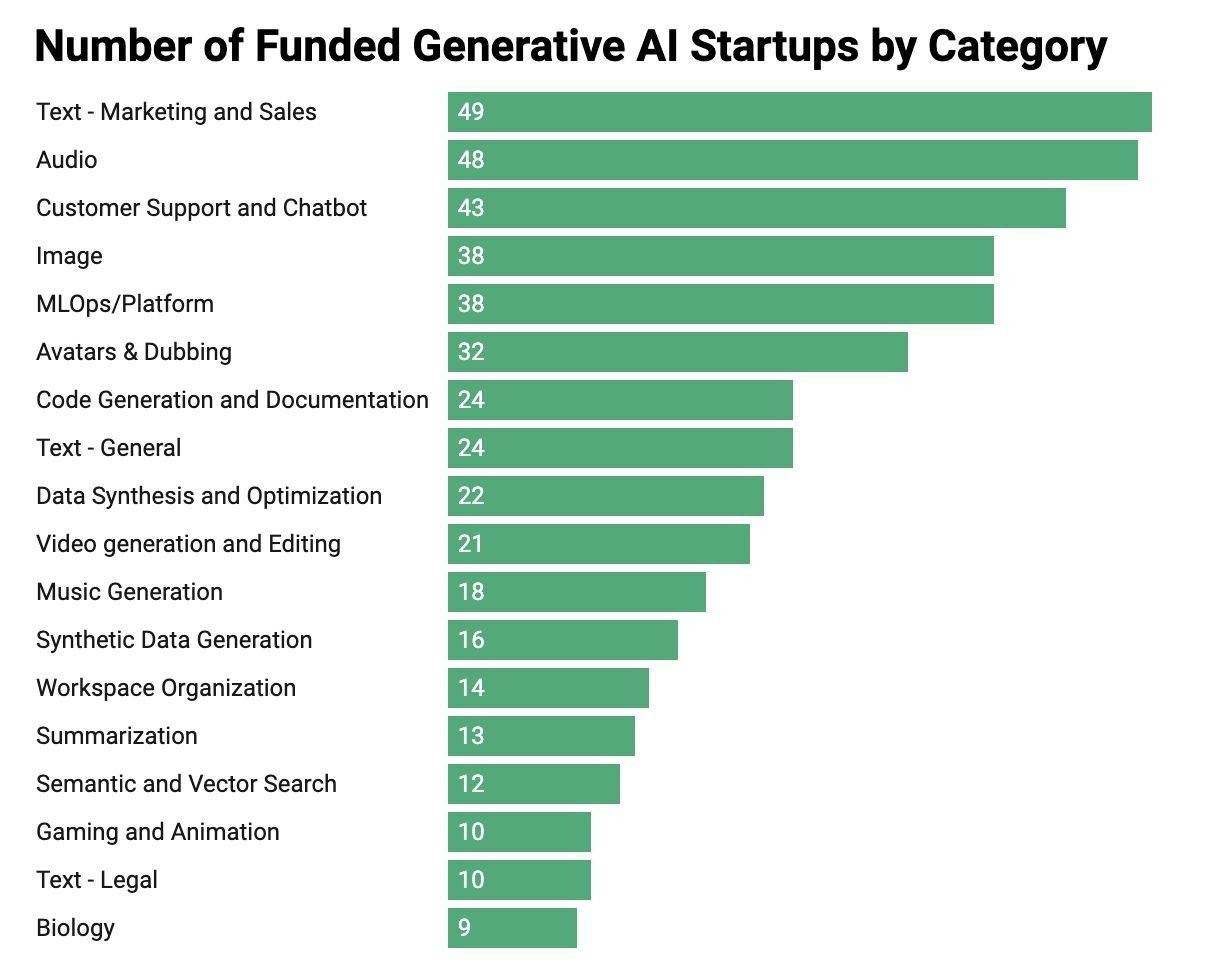
In the coming issues, we will explore the steps corporates need to take to ensure their digital transformation initiatives bring AI-powered MarTech on top of their existing stack in a safe and secure way, as well as focussing on the people aspect and manage change through effective communication and upskilling.
Spotlight On: Consensus.app
Consensus is an AI search engine that distils scientific research into evidence-based answers. Whether you’re curious about nutrition, economics, or anything in between, Consensus will show you the facts from peer-reviewed, published sources. Certainly not infallible, yet a great shortcut and again, a showcase of what is possible with these technologies.
Follow me
That’s all for this week. To keep up with the latest in generative AI and its relevance to your digital transformation programs, follow me on LinkedIn or subscribe to this newsletter.